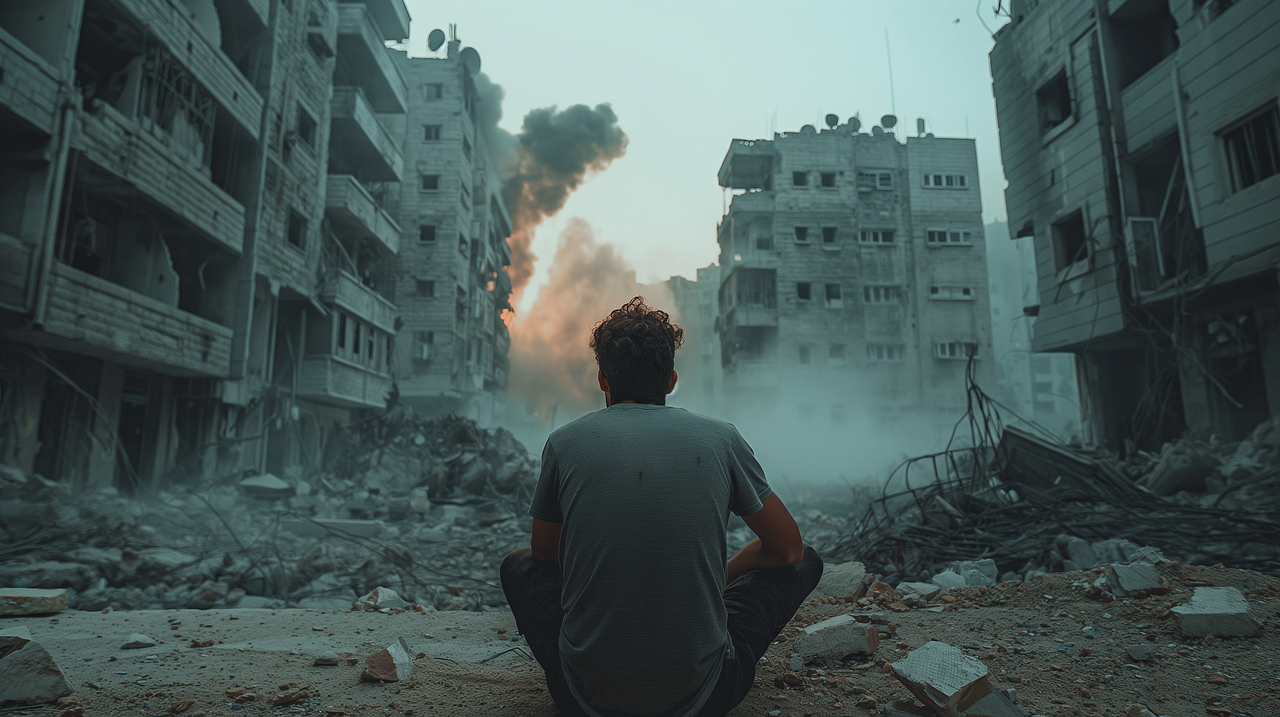

A baby girl tragically died from freezing temperatures in Gaza, as Israel and Hamas continued to point fingers at each other regarding delays in ceasefire negotiations amid the ongoing 14-month conflict.
The 3-week-old infant represents the third victim of extreme cold in the temporary tent camps of Gaza, as reported by local doctors. These deaths highlight the dire living conditions, with hundreds of thousands of Palestinians living in makeshift tents after fleeing Israeli assaults.
According to Gaza’s Health Ministry, the Israeli military campaign in Gaza has resulted in over 45,000 Palestinian deaths, with a significant portion being women and children. The ministry does not differentiate between combatants and non-combatants in their reported figures.
The military operations have led to extensive devastation and displaced about 90% of the 2.3 million residents in Gaza, often displacing them multiple times. Hundreds of thousands now seek refuge in tent camps along the coast as they face a cold winter. Aid organizations report difficulties in delivering necessary supplies, citing a lack of blankets, warm clothing, and firewood.
Israel has increased the volume of aid allowed into Gaza, with an average of 130 trucks per day this month, a rise from around 70 daily in previous months. However, this amount is still significantly less than what was provided earlier, and the U.N. states it can only distribute about half of the incoming aid due to restrictions by Israeli forces and rampant theft.
The father of 3-week-old Sila Mahmoud al-Faseeh attempted to keep her warm in their tent located in the Muwasi area outside Khan Younis by wrapping her in a blanket. Unfortunately, he stated that the tent wasn’t adequately sealed from the cold winds, and the ground was frigid, with overnight temperatures dropping to 9 degrees Celsius (48 degrees Fahrenheit). Muwasi is characterized by desolate dunes and farmland along Gaza’s Mediterranean coast.
“It was extremely cold overnight; even we as adults struggled to stay warm,” he recounted. Sila awoke crying three times during the night, and by morning, they discovered her unresponsive with stiffened limbs, he shared.
“She felt like wood,” al-Faseeh stated, as they rushed her to a field hospital, where medical staff attempted to revive her, but her condition had deteriorated beyond repair. Photographs taken by the AP depicted Sila with purple lips and blotchy, pale skin.
Ahmed al-Farra, director of the pediatric ward at Nasser Hospital in Khan Younis, confirmed that the baby succumbed to hypothermia. He also noted that in the past two days, two other infants — one 3 days old and another a month old — had arrived at the hospital who perished due to similar conditions.
Amid this tragedy, negotiations for a ceasefire appeared to be stalled on Wednesday as both Israel and Hamas exchanged accusations regarding the delay of an agreement.
In recent weeks, progress seemed to be in sight, with discussions concerning the return of numerous hostages held in Gaza. Nevertheless, complications have arisen.
While both parties have expressed cautious optimism about a potential resolution, key issues remain unresolved regarding the hostage exchanges and the withdrawal of Israeli forces from Gaza. Sources involved in the discussions revealed sticking points concerning the hostage negotiations and the deportation of displaced persons.
This Wednesday, Hamas accused Israel of imposing additional requirements related to troop withdrawal, the fate of prisoners, and the return of displaced individuals, which they argued was hindering the deal’s progress.
Israeli officials, on their part, claimed that Hamas was backing away from previously agreed-upon terms. Nevertheless, both sides indicated that talks were still ongoing.
Israel’s negotiation team, comprised of intelligence and military personnel, returned from Qatar on Tuesday night for internal discussions after what they deemed “significant negotiations.”
During the October 7, 2023, offensive on southern Israel, Hamas and allied groups took about 250 hostages to Gaza. A truce in November 2023 resulted in the release of more than 100 hostages, while others have either been rescued or their remains located over the past year.
Israel claims around 100 hostages are still held in Gaza, with approximately one-third believed to either have been killed during the initial assault or have died while in captivity.
While discussions have been sporadic for a year, there has been a renewed effort to strike a deal in recent weeks.
President-elect Donald Trump, set to assume office next month, has insisted on the immediate release of Israeli hostages, famously stating on social media that if they are not freed before his inauguration, there will be “HELL TO PAY.”
Families of the hostages are growing increasingly frustrated, urging the Israeli government to broker a ceasefire ahead of Trump’s inauguration.
Following the return of Israel’s high-level negotiating team from Doha, families of the hostages held an urgent press conference in Tel Aviv, advocating for a ceasefire and an immediate end to hostilities.
Shir Siegel, daughter of Israeli-American Keith Siegel, whose mother was released after over 50 days in captivity, emphasized that any delays could jeopardize lives. “There are moments when every second matters, and this is one of those critical times,” she articulated.
The proposed agreement would unfold in phases, including a cease in hostilities, the exchange of Israeli hostages in return for Palestinian prisoners, and a significant increase in humanitarian aid to the beleaguered Gaza Strip, according to officials from Egypt, Hamas, and the U.S. The final phase would involve the release of any remaining hostages, a conclusion to the conflict, and discussions on rebuilding efforts.
AI generated news post.